


For installers and contractors across Europe, few service calls are as frustrating as the “leaky shower door.” You’ve set the glass perfectly, the hardware is plumb, and the client is happy—until a week later, you get the call: “There’s water pooling on the floor near the bottom corners.”
In the European market—where EN 14428 standards govern shower enclosure safety and CE marking is mandatory—leakage isn’t just an annoyance. It’s a compliance issue, a potential slip hazard, and a threat to the structural integrity of modern wet-room designs.
At Zhongshan Weichen Sanitary Ware Co., Ltd., we’ve spent years engineering shower enclosures specifically for the European climate and construction methods. This guide breaks down the real reasons shower doors leak at the bottom corners—and how to fix them permanently.
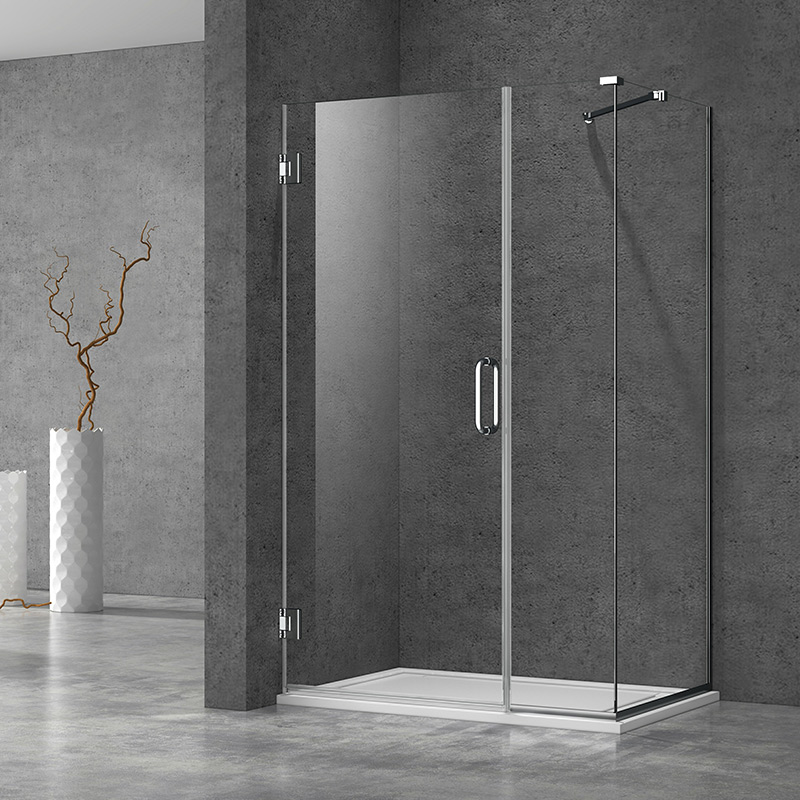
1. The Physics of Water: Why Corners Are the Weakest Point
Before diving into troubleshooting, you must understand how water behaves in a shower enclosure.
Water rarely leaks through the middle of a seal. It travels along surfaces via capillary action and surface tension. The bottom corners of a shower door are the most vulnerable area because they are:
- The lowest point in the system, where gravity pulls water.
- The intersection of multiple planes (glass, wall, tray, and door).
- Subject to movement from door operation and building settlement.
In Europe, where many homes feature low-profile shower trays or tile-levelling systems, the margin for error is even smaller.
2. Reason #1: The Shower Tray Isn’t Level (The #1 Cause)
The Problem
Building floors are rarely perfectly level. If the shower tray slopes away from the drain at the front, water naturally flows toward the outer edge of the enclosure. Even a 2mm slope over 800mm is enough to cause overflow at the corners.
The Diagnosis
Place a spirit level on the shower tray surface, parallel to the door threshold. Check both the front-to-back and side-to-side levels.
The Solution
- The Shim Fix: If the tray is installed on a wooden floor, you can often access the underside to add shims.
- The Silicone Bridge: If the tray is permanently fixed, you must create a “dam” using high-quality, sanitary-grade silicone. Apply a bead along the entire length of the threshold, ensuring it bridges the gap and slopes slightly inward toward the drain. Pro Tip: Use a finger or tooling stick to press the silicone deep into the joint, eliminating air pockets.
3. Reason #2: Incorrect Installation of the Bottom Sweep (Door Seal)
The flexible PVC or rubber strip at the bottom of the door (the “sweep”) is your first line of defense.
The Problem
Many installers cut the sweep too short or fail to seat it properly into the aluminum carrier profile. If the sweep doesn’t extend fully into the corner profiles, water escapes underneath.
The Diagnosis
Open the door and inspect the ends of the bottom sweep. Is there a visible gap between the sweep and the vertical wall profile? Does the sweep lift slightly when the door opens?
The Solution
- Measure Twice, Cut Once: Ensure the sweep is 1-2mm longer than the door width. This creates a slight compression fit.
- Seal the Ends: Apply a tiny dab of clear silicone at the junction where the sweep meets the corner profile. This “plugs” the gap without making the sweep look messy.
- Check Orientation: Some sweeps have a specific “fin” orientation. Ensure the fin points inward (into the shower) to deflect water back.
4. Reason #3: Wall Profile Gaps (The “Hidden Channel”)
In Europe, shower enclosures typically use aluminum wall profiles (uprights) to account for un-square walls. These profiles are fixed to the wall, and the glass slides into them.
The Problem
The gap between the wall profile and the glass is often overlooked. If the profile is installed slightly away from the wall, or if the silicone seal inside the profile fails, water travels down the glass, behind the profile, and out onto the floor.
The Diagnosis
Look behind the vertical aluminum profile. Is there daylight or a visible gap between the profile and the tile?
The Solution
- Internal Sealing: Before installing the glass, apply a continuous bead of silicone inside the back channel of the aluminum profile.
- External Sealing: After the glass is installed, seal the outside of the profile where it meets the wall. This creates a dual-barrier system.
- The “Fin” Seal: Ensure the clear vinyl fin seal (the strip that sits between the glass and the profile) is pushed all the way to the bottom. Many installers leave it 5mm short, creating a direct channel for water.
5. Reason #4: The Magnetic Strip Gap (Frameless Doors)
For frameless hinged doors popular in luxury European bathrooms, a magnetic strip ensures the door stays closed.
The Problem
If the door is out of alignment (twisted in the hinges), the magnetic strip doesn’t make full contact at the bottom. Water pressure during a shower forces the door open microscopically, allowing water to escape.
The Diagnosis
Close the door and try to slide a credit card between the magnetic strip and the glass at the bottom corner. If it slides in easily, the seal is insufficient.
The Solution
- Hinge Adjustment: Most modern frameless hinges have grub screws that allow for micro-adjustments. Loosen the screws slightly, push the door firmly into the closed position, and retighten.
- Shim the Hinges: If the wall is bowed, you may need to place thin plastic shims behind the hinge plates to bring the door plumb.
6. Reason #5: The “Splash-Out” Effect (Oversized Shower Heads)
European consumers love rainfall shower heads and body jets. While luxurious, they create a massive volume of water hitting the glass at high velocity.
The Problem
If the shower head is positioned too close to the door or aimed directly at the glass corners, the sheer force of the water can overcome the seals and splash out.
The Diagnosis
Observe the water flow during a shower. Does the water jet hit the glass within 15cm of the door seal?
The Solution
- Reposition the Arm: Extend the shower arm so the water falls closer to the center of the tray.
- Install a Return Panel: For walk-in showers, a small 300mm return panel (a fixed glass panel perpendicular to the main screen) is the most effective solution to block splash-out.
7. The European Standard: EN 14428 Compliance
As a professional, you must align with EN 14428:2015, the European Standard for Shower Enclosures.
This standard specifies:
- Water Tightness: The enclosure must prevent water leakage during normal use.
- Structural Safety: The glass must remain stable under load.
- Durability: The seals and hardware must withstand 20,000 opening/closing cycles.
8. The Ultimate Troubleshooting Checklist for Installers
Before you leave a job site, run through this 5-point check:
Conclusion: Precision Prevents Problems
Leaking shower doors are rarely caused by defective products. They are caused by installation tolerances and environmental factors. By understanding the physics of water and following the EN 14428 guidelines, you can eliminate callbacks and build a reputation for flawless installations.
At Zhongshan Weichen Sanitary Ware Co., Ltd., our enclosures are engineered with deep-channel profiles, pre-glued magnetic seals, and precision-cut sweeps to give European installers the maximum margin for error.
Post time: Jun-12-2026