


Bathrooms are arguably the harshest environment any household metal will ever face—constant condensation, hot-cold cycles, alkaline soaps, acidic shampoos, and in coastal regions, salt-laden air. For wholesalers, procurement managers, contractors, and premium bathroom brands, specifying the wrong profile material doesn’t just mean a rusty towel rail; it means warranty claims, replacement costs, and reputational damage.
Two materials dominate the specification conversation: 304 stainless steel and aluminum alloy (typically 6463). Both are marketed as “rust-proof,” yet they behave very differently once the first scratch appears, the exhaust fan fails, or a guest leaves the window closed during a Hong-Kong-style “returning humidity” week.
This guide breaks down the metallurgy, the real-world test data, the total-cost-of-ownership math, and a scenario matrix so you can stop guessing and start specifying with confidence.
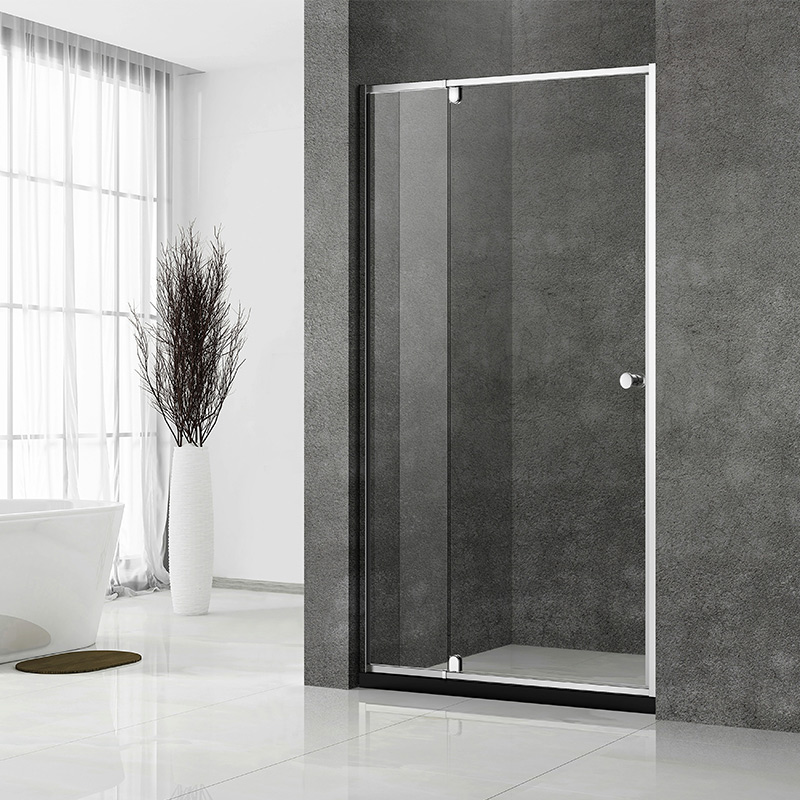
1. Why Bathrooms Are a Special Case
Before comparing metals, it’s worth clarifying what “high humidity” actually means in engineering terms:
- Relative humidity: 70–95% for extended periods (showers, no window, tropical climates).
- Temperature swing: 15–50 °C multiple times per day → condensation cycles.
- Chemical exposure: Soaps (pH 6–9), descalers (acidic), bleach-based cleaners.
- Chloride risk: Coastal homes, pool-adjacent bathrooms, or even “softened” tap water.
Most metals survive a dry kitchen just fine. Bathrooms, however, combine moisture + oxygen + electrolytes + thermal shock—the exact recipe for galvanic corrosion, pitting, and coating failure.
2. The Two Contenders: A Metallurgical Primer
2.1 304 Stainless Steel
304 is the industry’s “default” austenitic stainless grade: 18% chromium, 8–10% nickel, balance iron. The chromium forms a self-repairing passive Cr₂O₃ film at the atomic level. Even if you scratch it, oxygen in the air re-passivates the exposed surface within minutes—provided chloride concentration isn’t extreme.
Key numbers:
- Density: 7.93 g/cm³
- Tensile strength: ≥500 MPa
- Salt spray (ASTM B117): 1,000+ hours before red rust appears
- Common trap: “201 stainless” is often sold as “stainless” at lower price points (nickel 1–3%)—it pits within months in bathrooms. Always ask for a mill test report.
2.2 Aluminum Alloy (6063-T5 / “Space Aluminum”)
Aluminum doesn’t form a chromium film—it forms Al₂O₃ via anodizing(5–25 μm typical) or electrostatic powder coating(60–120 μm). The base metal itself is highly reactive; the coating is the entire defense. If the coating is scratched through to substrate, or if cut edges aren’t sealed, you get “white rust” (aluminum oxide blooming) and eventually pitting.
Key numbers:
- Density: 2.70 g/cm³ (~⅓ of stainless)
- Tensile strength (6063-T5): ~215 MPa (half of 304, but extrudes beautifully)
- Salt spray (good anodizing): 300–500 hours before edge corrosion
- Advantage: Extrusion allows complex profiles (arc showers, slim framing) stainless can’t match without welding.
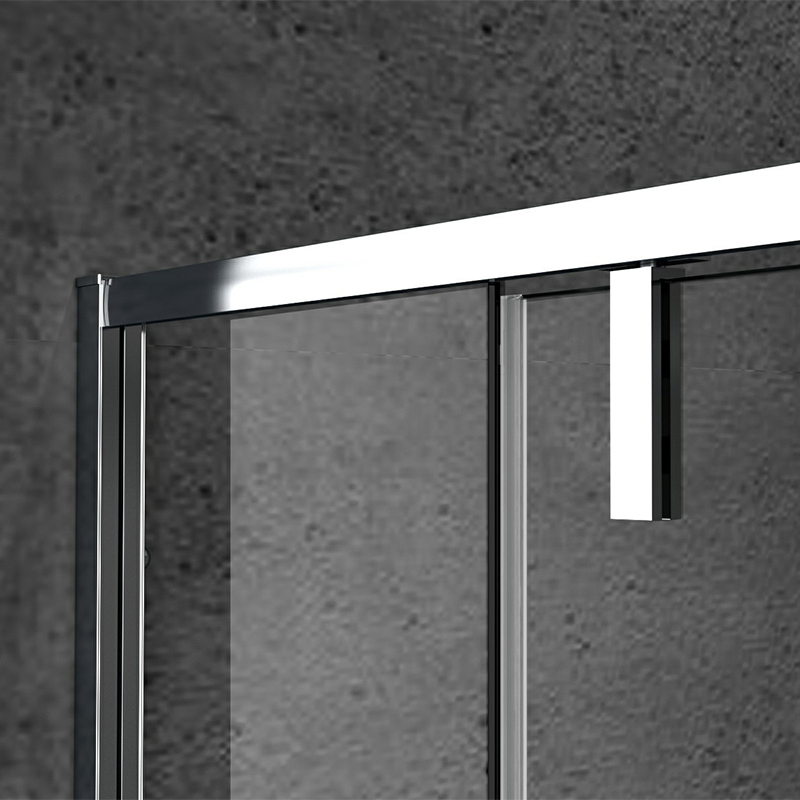
3. Head-to-Head Comparison
| Dimension | 304 Stainless Steel | Aluminum Alloy (6063-T5, anodized/powder-coated) |
|---|---|---|
| Corrosion mechanism | Self-healing Cr-oxide film | Barrier coating (anodize / powder coat) |
| Salt-spray resistance | 1,000+ hrs (no red rust) | 300–500 hrs (edge creep) |
| Density / weight | 7.93 g/cm³ – heavy | 2.70 g/cm³ – ~65% lighter |
| Strength | 500+ MPa, rigid | ~215 MPa, softer, dents easier |
| Fabrication | Laser weld → seamless joints | Extrude + corner connectors (micro-gaps) |
| Surface repair | Scratch = self-heals | Scratch = permanent breach (needs touch-up) |
| Style options | Brushed, mirror, PVD (gold/black) | Matte anodize, RAL powder coat palette |
| Entry price (same profile) | Baseline | ~30–50% cheaper than 304 |
| Service life (bathroom) | 15+ years, low maintenance | 8–12 years, depends on coating care |
| Best for | Coastal, poor ventilation, heavy-use | Budget projects, colored/matte looks, curved profiles |
(Data synthesized from factory salt-spray logs and field return reports.)
4. Where Each Material Wins (and Loses)
4.1 304 Stainless Steel — The “Set-and-Forget” Choice
Choose 304 when:
- The bathroom has no window or weak extraction (condensation sits overnight).
- You’re supplying coastal properties where salt air drifts indoors.
- The spec calls for frameless or semi-frameless shower enclosures—laser-welded stainless gives ±0.1 mm joint tolerances, no crevices for biofilm.
- Hardware will be abraded (towel bars hit by rings, hinges cycled thousands of times).
- The brand promise is “10-year warranty, zero rust.”
Watch-outs:
- Price: 304 profiles typically cost 40–60% more than aluminum for the same geometry.
- Weight: Heavy sliding door rollers need stronger anchoring; shipping FCL costs rise.
- 201冒充 (fake 304): In some markets, “stainless” tags hide 201. Insist on SGS / mill certificate, Ni ≥ 8%.
4.2 Aluminum Alloy — The Versatile Value Player
Choose aluminum when:
- Budget drives the spec (mid-range residential, rental refurbishments).
- You need custom colors (RAL powder coat gives matte black, sand beige, etc.—PVD on stainless is pricier).
- The design is curved / arc / diamond-shaped—extrusion beats bending stainless tube.
- Ventilation is good (window + extractor) and the owner wipes down weekly.
- Sliding systems on lightweight partition walls where heavy stainless would stress fixings.
Watch-outs:
- Cut edges & screw holes: These are the first failure points. Demand double-sealed corners and drainage channels so joints don’t sit wet.
- Alkaline cleaners: Long-term exposure to pH > 9 strip anodize. Contractors should specify pH-neutral cleaners.
- Galvanic coupling: Avoid brass screws directly on raw aluminum—use stainless fixings or isolator washers.
5. The TCO Argument (Total Cost of Ownership)
A pure “ex-factory price” comparison misleads buyers. Here’s the math most distributors overlook:
| 304 Stainless Enclosure | Aluminum Enclosure | |
|---|---|---|
| Ex-factory (8mm frameless, 1 m²) | $180 | $115 |
| Install hardware (hinges/rollers) | Stainless included | May need stainless upgrade (+$12) |
| Maintenance @ Year 3–5 | None | Hinge adjust / repaint edges ($20–30) |
| Replacement @ Year 8 | Not needed | Possible ($115 again) |
| Effective 10-yr cost | ~$180 | ~$160–270 |
In well-ventilated, mid-tier projects, aluminum still wins on TCO. In poor-ventilation or coastal projects, 304′s TCO collapses to the lower line because aluminum needs mid-life intervention. This is the slide you want in your distributor pitch deck.
6. Scenario Matrix — Quick-Spec Guide
| Project Type | Recommended Material | Why |
|---|---|---|
| Luxury villa, en-suite, stone tiling | 304 stainless (brushed/PVD) | Zero patina risk, matches tapware |
| Coastal Airbnb, tiled shower | 304 (or 316 if < 500 m from sea) | Chloride pitting kills aluminum in 2–3 yrs |
| Urban apartment, window + extractor | Aluminum (anodized) | Ventilation saves the coating |
| Curved quadrant shower (small footprint) | Aluminum extrusion | Stainless bending = expensive, limited radius |
| Commercial gym locker room | 304 | High-abuse, constant steam |
| Rental refurb, < $200 all-in hardware | Aluminum (powder coat) | Margin math |
| Frameless glass, minimal hardware | 304 | Weldless corners, no screws to leak |
7. Surface Treatments That Actually Move the Needle
For B2B buyers, “304″ and “aluminum” are starting points—the finish decides whether the product survives Year 6.
On 304 Stainless
- Mill finish → only for hidden brackets.
- Brushed / satin → most popular, hides water spots.
- Mirror polish → looks luxe, shows every fingerprint.
- PVD coating (gold, black, rose gold, bronze) → titanium nitride layer, 3–5× harder than bare stainless, superb for designer lines.
- Passivation post-fabrication → removes free iron from cutting; non-negotiable for coastal projects.
On Aluminum Alloy
- Clear anodize (10–15 μm) → baseline, silver look.
- Color anodize (bronze, black) → thicker (20+ μm), better hide.
- Electrostatic powder coat (60–120 μm) → best for RAL custom colors; must include pre-anodize + chromate conversion underneath, or adhesion fails in steam.
- Full-immersion anodize vs. hang-line → immersion reaches interior channels; hang-line leaves rack marks (water traps). Ask your factory which.
8. Common Specification Mistakes (and How to Avoid Them)
- “Stainless = stainless” → It doesn’t. 201 rusts in bathrooms within 6 months. Require Ni ≥ 8%in contract.
- Ignoring the fasteners → A 304 frame with plated steel screws still leaks rust streaks. Spec 304 or 316 screws throughout.
- Aluminum cut edges unsealed → White oxide blooms at the mitre within a year. Insist on corner sealant + drainage weep holes.
- Over-specifying thickness → 1.0 mm stainless already exceeds 1.2 mm aluminum in stiffness. Pushing 1.5 mm stainless just raises freight.
- Matching tapware finish → If the client has matte black taps, PVD black stainless or black powder-coat aluminum—but not mixed (one will fade differently).
9. Quick FAQ
Q: Is 304 enough for seaside apartments, or do I need 316?
A: Within ~500 m of coast, 316 (with 2–3% Mo) adds peace of mind—especially for external balcony showers. For indoor bathrooms 1 km+ from shore, 304 holds up fine if ventilated.
Q: Does “space aluminum” mean aircraft-grade?
A: Marketing term. Almost always 6063-T5 architectural extrusion. Good enough, but confirm anodize thickness (≥15 μm for bathrooms).
Q: Can I mix stainless hinges on an aluminum frame?
A: Yes, but use nylon washers or isolate with gaskets—dissimilar metal + condensation = galvanic creep over time.
Q: Which is more sustainable?
A: Aluminum melts at much lower temp and is widely recycled; stainless lasts longer. From a per-year-of-service carbon view, they’re close—specify based on life-cycle, not just material.
10. Bottom Line for Buyers & Brand Owners
There’s no universal winner—only the right material for the right bathroom:
- 304 stainless steel = the low-risk, low-maintenance, higher-entry-cost choice for coastal, poorly ventilated, or premium-spec bathrooms where “zero rust” is the brand promise.
- Aluminum alloy = the versatile, lightweight, color-flexible, budget-friendly choice for ventilated urban bathrooms, curved designs, and projects where a 3–5-year touch-up cycle is acceptable.
For distributors and OEM brands, the smartest catalog often carries both: aluminum for the volume mid-tier SKUs, 304 (and a few 316 coastal SKUs) for the premium / specifier-driven line. That way you’re never cornered when a contractor says “this is a beachfront property.”
Post time: Jul-16-2026