


Most homeowners treat the shower enclosure as a finish item—glass, tile, a door. The mistakes that cost thousands happen earlier, in decisions that are invisible once the tile goes down. Here are ten specific, expensive errors, ranked by how much they actually take out of your wallet.
Ordering Glass Before Rough Framing Is Final
The expensive reality: Generators and glass panels ordered too early are a classic sequencing mistake. Final enclosure dimensions, ceiling height, and wall material almost always shift during construction. A custom glass panel cut for an early measurement that changes by half an inch becomes a $400–$850 fixed panel that no longer fits.
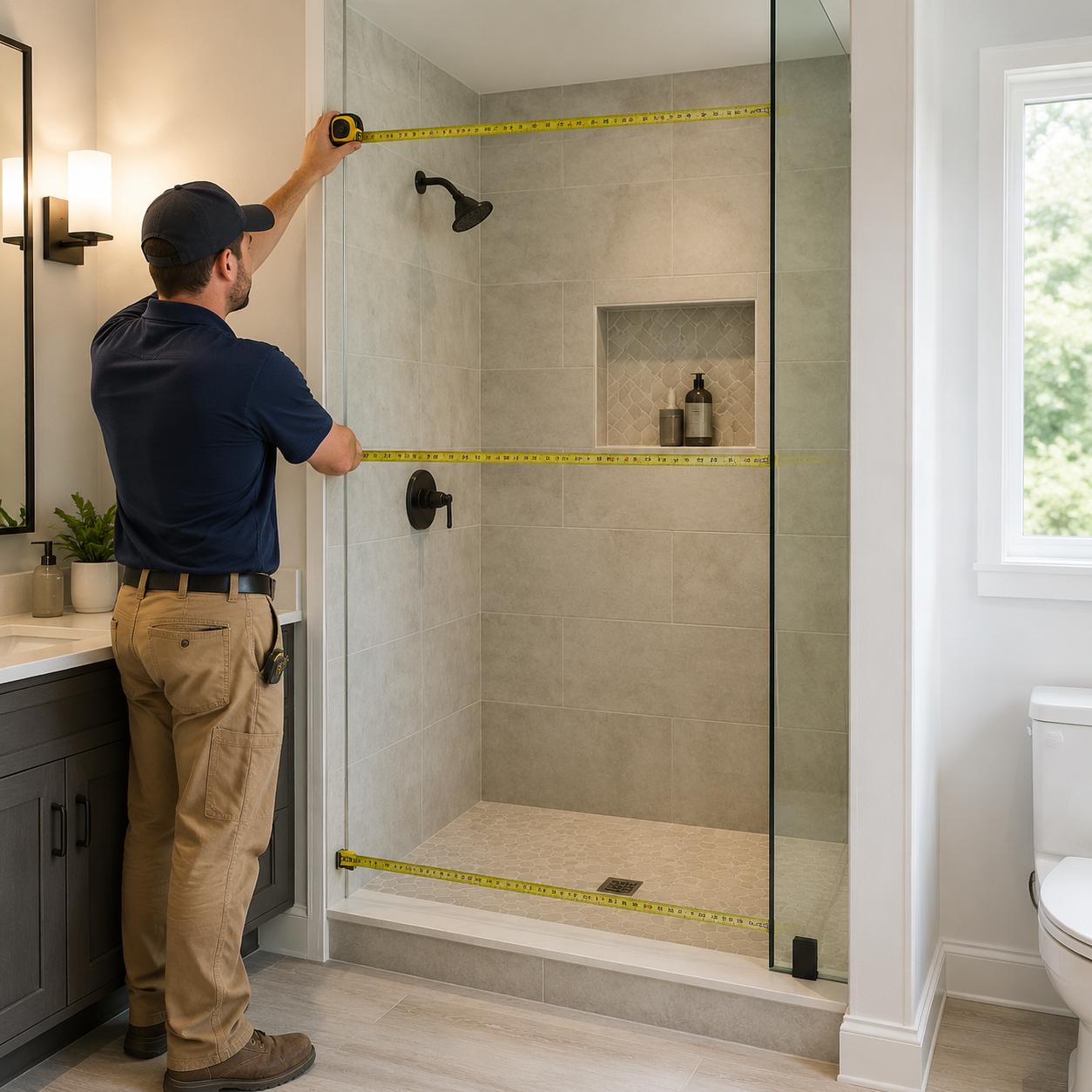
The fix: Wait until rough framing and substrate are complete before measuring for glass. For steam showers, wait until framing is done before sizing the generator—not before.
Measuring One Point and Assuming the Walls Are True
The expensive reality: Walls are rarely plumb, and corners are rarely exactly 90 degrees. Frameless glass is unforgiving: a glass company will either charge a $200–$400 shimming fee to compensate for out-of-plumb walls, or walk away from the job entirely. If the glass goes over tile that is not flat, every lippage and out-of-plumb joint is visible through clear glass from six feet away.
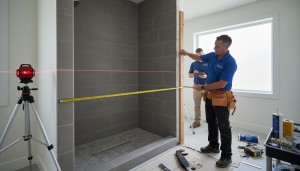
The fix: Measure wall width at top, middle, and bottom. Measure depth at left, center, and right. Use the smallest measurement. Check square by measuring corner-to-corner diagonals—unequal diagonals mean the space is out of square.
Skipping the 24-Hour Flood Test Because “It Looks Sealed”
The expensive reality: A 24-hour flood test before tile is the only way to confirm a waterproofing membrane actually works. Without it, you are relying entirely on the contractor’s execution. When a membrane fails—often at corners, drain penetrations, or seams—water reaches the drywall and framing for months before a ceiling stain appears below. By then, what could have been a $150 repair becomes a $12,000 rebuild.
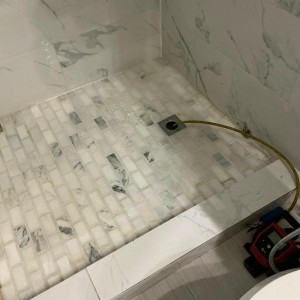
The fix: Require a flood test before tile goes down. Seal the drain, fill the pan with water, and wait 24 hours. If the water level drops, the membrane failed.
Using Tile and Grout as the Waterproofing Layer
The expensive reality: Tile and grout are not waterproof. The membrane underneath is what keeps water out of the structure. In older homes, tile was often installed over ordinary drywall with no membrane at all. A single cracked grout line or failed caulk joint then feeds water directly into the wall cavity. Mold remediation from a failed shower system typically costs $5,000 to $20,000.
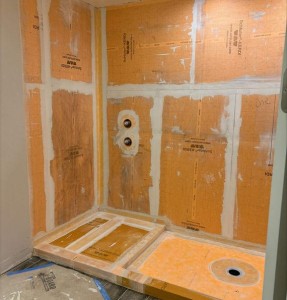
The fix: A continuous waterproofing membrane—sheet or liquid-applied—must be installed over the substrate before any tile. Ask to see the membrane installation before tile goes down.
Getting the Shower Pan Slope Wrong
The expensive reality: Standing water at the back of the shower is not a cosmetic annoyance. Inadequate pitch causes water to pool, prolonging moisture exposure and accelerating failure. A shower pan re-slope runs $599–$999 if caught before structural damage. If it leads to subfloor rot, replacement runs $4,000–$10,000+.
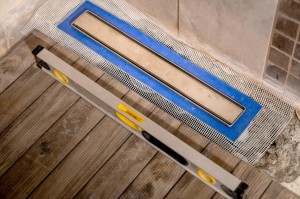
The fix: The pan must slope toward the drain at a rate that eliminates pooling. Test it before tile: pour a bucket of water on the pan and watch where it sits.
Installing a Frameless Door Without Accounting for Showerhead Direction
The expensive reality: This is the number one reason for leaking shower door callbacks. A perfectly installed frameless enclosure will leak if the showerhead is angled toward the door seam. Callbacks typically run $150–$600, but repeated water on the floor eventually reaches the subfloor.
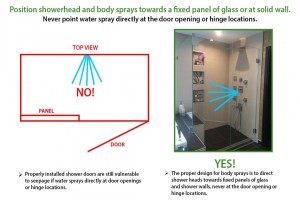
The fix: Angle the showerhead toward the back or a side wall, not toward the door opening. Avoid aiming handheld sprayers directly at door seams.
Using the Wrong Door Sweep—or No Sweep at All
The expensive reality: The clear vinyl door sweep is critical for leak prevention. The wrong sweep leaves a gap, and water runs out under the door. Skipping correct sweeps often costs more in callbacks and water damage than the money saved upfront.
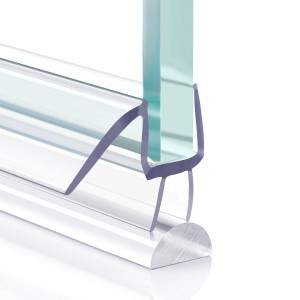
The fix: Match the sweep profile to the threshold type. If the door leaks at the bottom, check the sweep before assuming the glass or hinges are at fault.
Ignoring the Curb Height and Depth Code
The expensive reality: Finished curbs must meet specific code dimensions to contain splash-out. A curb that is too shallow fails inspection. Remediating a failed curb after tile installation can push costs from $400–$900 to $3,000–$8,000+ due to demolition and re-waterproofing.
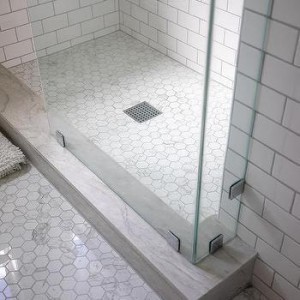
The fix: Confirm curb dimensions against local plumbing code before the pan is poured. The curb is structural, not decorative.
Cutting Corners on the Waterproofing Membrane System
The expensive reality: Waterproofing is a complete system. Vulnerable points are corners and junctions. A cheap quote that leaves out detailing is just deferring a $3,000–$8,000+ strip-and-redo repair.
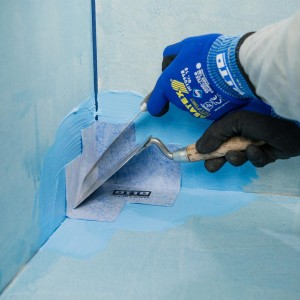
The fix: Compare quotes line by line. Ask specifically how corners, drain connections, and pipe penetrations will be treated.
Undersizing the Steam Generator
The expensive reality: An undersized generator runs flat out, takes too long to produce steam, and wears out early. If the enclosure isn’t steam-tight, no generator will fix it. Stone and high ceilings require upward adjustments in power.
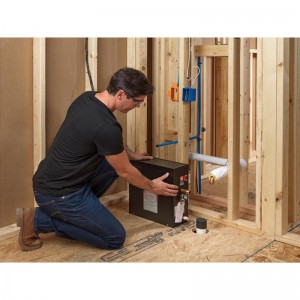
The fix: Size the generator after the enclosure is framed and final materials are known. Do not size from a spec sheet for an empty enclosure.
The Thread That Connects All Ten
None of these mistakes are about the glass looking less beautiful. They are about water going where it is not supposed to go, and the cost of stopping it after the fact. The waterproofing membrane, the pan slope, the curb, the sweep, and the showerhead angle are all parts of one containment system. Spend the money getting that system right before tile—because the repair bill for getting it wrong is not measured in hundreds. It is measured in thousands.
Post time: Oct-19-2026