


Choosing the right sauna can make a big difference in your home wellness experience. Today, infrared saunas and traditional saunas are two of the most popular options for homeowners, hotels, spas, and wellness centers. While both provide relaxing heat experiences, they work in different ways and offer distinct advantages.
So, which is better: an infrared sauna or a traditional sauna?
In this guide, we’ll explore 7 key differences between infrared and traditional saunas, including heating methods, temperature, health and wellness benefits, energy consumption, installation, maintenance, and cost. By understanding these differences, you can make a more informed decision for your home or commercial project.
1 Heating Method: How Do They Work?
The biggest difference between infrared and traditional saunas is how they produce heat.
An infrared sauna uses infrared heating elements to emit infrared radiation, which is absorbed by the body and warms it directly. Instead of primarily heating the surrounding air, infrared technology delivers radiant heat to the body.
This allows users to enjoy a warming experience at relatively lower room temperatures.
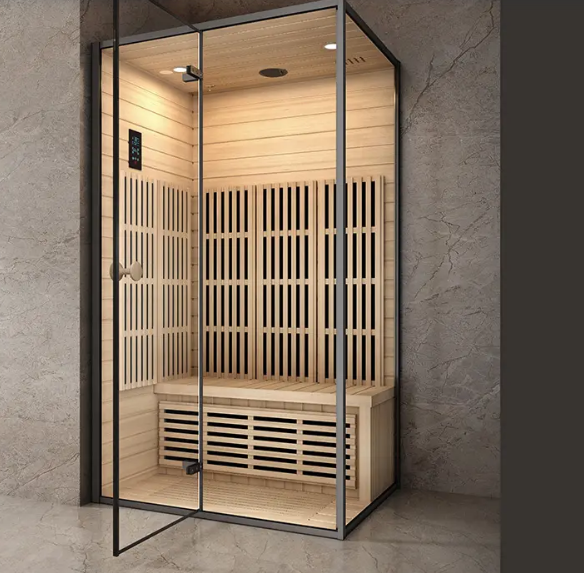
A traditional sauna uses an electric heater or wood-burning stove to heat the air inside the sauna room. Heated stones can also be sprinkled with water to create steam, increasing the humidity and producing a more intense heat experience.

Both systems offer relaxation, but the heating methods create different sauna environments.
2 Temperature: Which Sauna Gets Hotter?
Temperature is another important factor when comparing infrared and traditional saunas.
- Infrared Sauna: Typically operates between 45°C and 60°C (113°F–140°F).
- Traditional Sauna: Typically operates between 70°C and 100°C (158°F–212°F).
Traditional saunas generally reach higher air temperatures, creating an intense heat experience. Infrared saunas operate at lower temperatures while using radiant heat to warm the body.
If you prefer a gentler heat environment, an infrared sauna may be a suitable choice. If you enjoy high temperatures and a classic sauna atmosphere, a traditional sauna may be more appealing.
3 Sweating Experience: What’s the Difference?
Both infrared and traditional saunas can make you sweat, but the experience is slightly different.
In a traditional sauna, the surrounding hot air raises your body temperature and encourages sweating. Adding water to the heated stones creates steam, making the environment feel even hotter.
In an infrared sauna, radiant heat warms the body directly. Although the room temperature is lower, users can still experience considerable sweating during a session.

Note: It’s important to remember that sweating is primarily the body’s natural cooling mechanism. It should not be considered proof of detoxification or fat loss.
4 Health and Wellness Benefits
Both types of saunas are commonly used for relaxation and general wellness.
Potential Benefits of Infrared Saunas
- Promotes relaxation and a sense of comfort.
- Provides a lower-temperature heat environment.
- May help relieve temporary muscle tension.
- Offers a convenient option for regular home wellness routines.
Potential Benefits of Traditional Saunas
- Provides a classic hot-air sauna experience.
- Encourages sweating through exposure to high temperatures.
- Creates a relaxing environment after physical activity.
- Offers an enjoyable social wellness experience.
Research on sauna use suggests potential cardiovascular and general wellness benefits, although the strength of evidence varies. Infrared sauna research is still developing, and neither sauna type should be considered a replacement for medical treatment.
5 Energy Consumption
Energy consumption is an important consideration, especially for homeowners and commercial buyers planning long-term use.
| Comparison | Infrared Sauna | Traditional Sauna |
|---|---|---|
| Heating system | Infrared panels | Electric or wood-burning heater |
| Warm-up time | Generally shorter | Generally longer |
| Operating temperature | 45–60°C | 70–100°C |
| Energy use | Often lower | Often higher |
| Main heat source | Radiant heat | Heated air and stones |
Actual electricity costs depend on the sauna’s rated power, local electricity prices, insulation, and frequency of use. Always check the product specifications before purchasing.
6 Installation and Maintenance
Infrared Sauna Installation
Many infrared saunas are designed for convenient indoor installation. Typical requirements include:
- A suitable flat and level floor.
- Adequate ventilation.
- An appropriate electrical connection.
- Sufficient space for installation and maintenance.
Traditional Sauna Installation
Traditional saunas may require more preparation. Important considerations include:
- Appropriate electrical capacity for heaters.
- Heat-resistant interior materials.
- Proper ventilation and waterproofing.
- Safe heater and stone installation.
7 Price: Which Sauna Offers Better Value?
The purchase price of a sauna depends on its size, materials, heating system, features, and manufacturing quality.
When comparing prices, consider:
Infrared Sauna vs. Traditional Sauna: Quick Comparison
Which Sauna Should You Choose?
Choose an infrared sauna if:
- You prefer a lower-temperature environment.
- You want a convenient home wellness solution.
- You have limited installation space.
- You prefer radiant heating technology.
Choose a traditional sauna if:
- You enjoy high-temperature sauna sessions.
- You prefer the classic Finnish sauna experience.
- You want the option of adding water to heated stones.
- You are planning a traditional spa facility.
Looking for a Reliable Sauna Manufacturer?
At Weichen Sanitary, we specialize in bathroom and wellness solutions, including infrared sauna rooms, shower enclosures, panoramic shower doors, and other sanitary products.
Contact us today to request our infrared sauna catalog and wholesale quotation.
Post time: Nov-19-2026